01
Measure
Set the baseline before choosing the work.
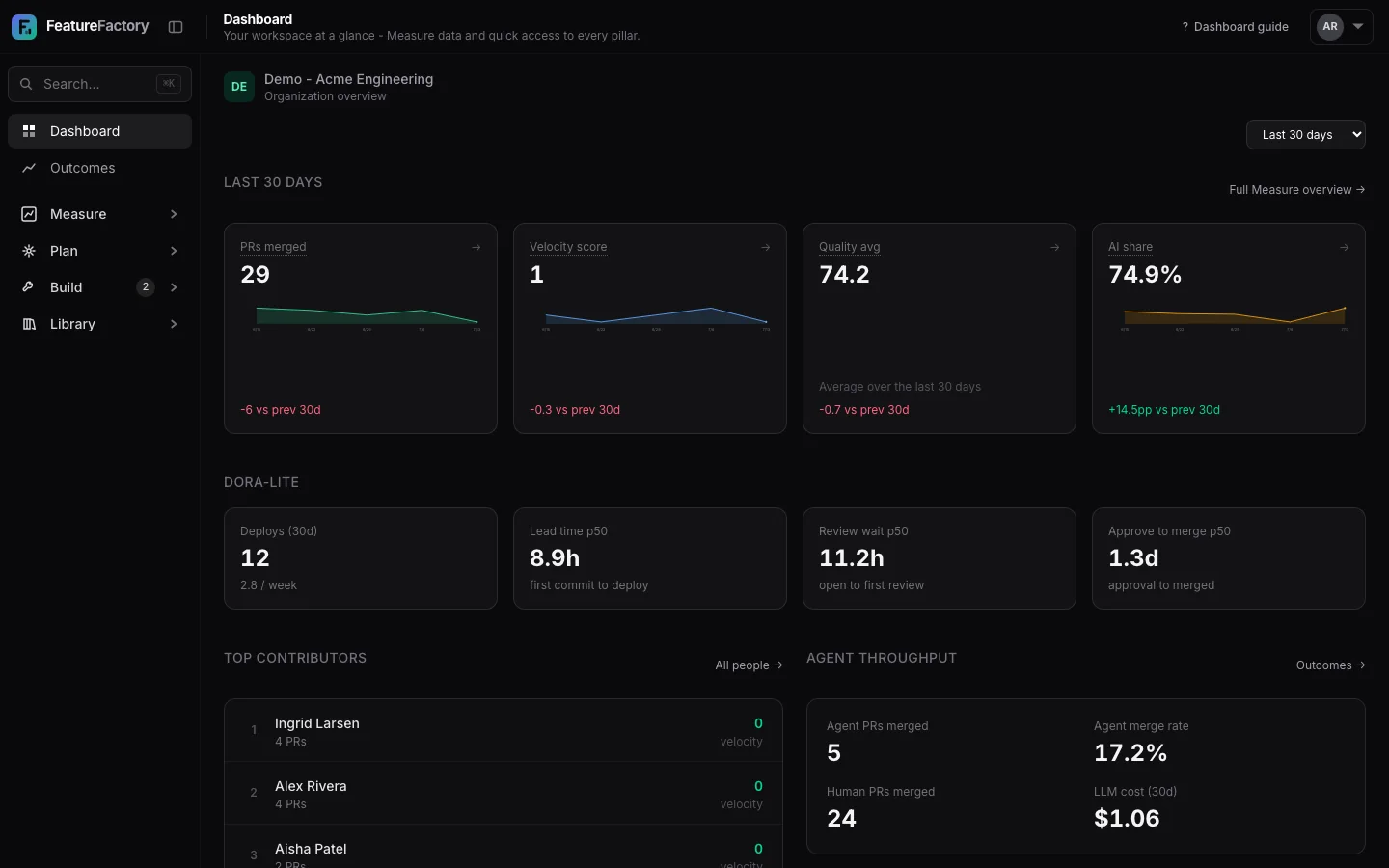
Connect delivery history and establish the quality, flow, and outcome measures the feature is meant to change.
- Signal
- Checkout completion is falling
- Baseline
- 61% completion
- Target
- At least 70%
Product tour · 4-minute walkthrough
FeatureFactory connects feedback, planning, agent execution, and engineering measurement in one auditable loop. Your team keeps its tools, its review process, and its IP.
One connected record
Signal → theme → product plan → work order → scored PR → outcome
The product loop
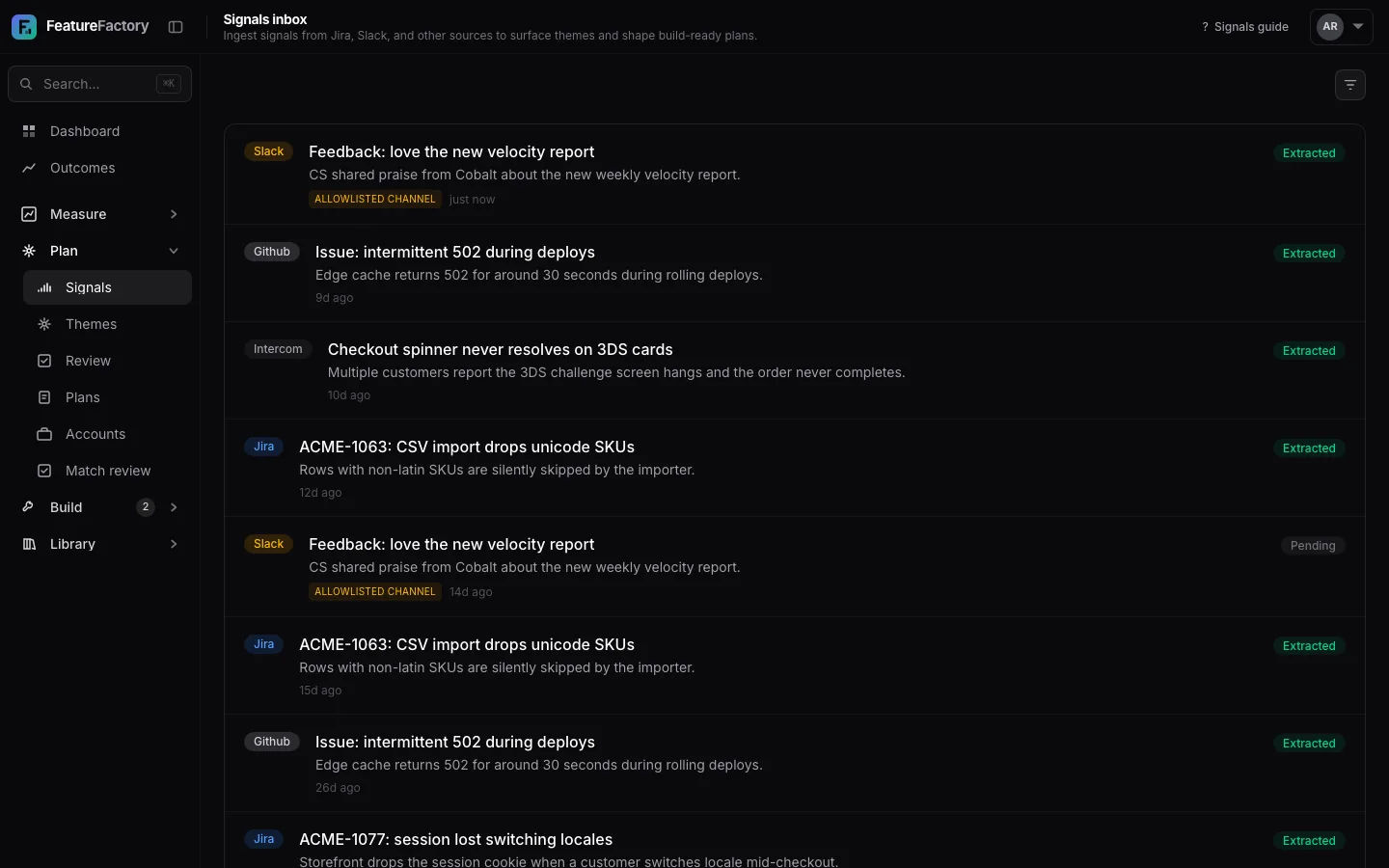
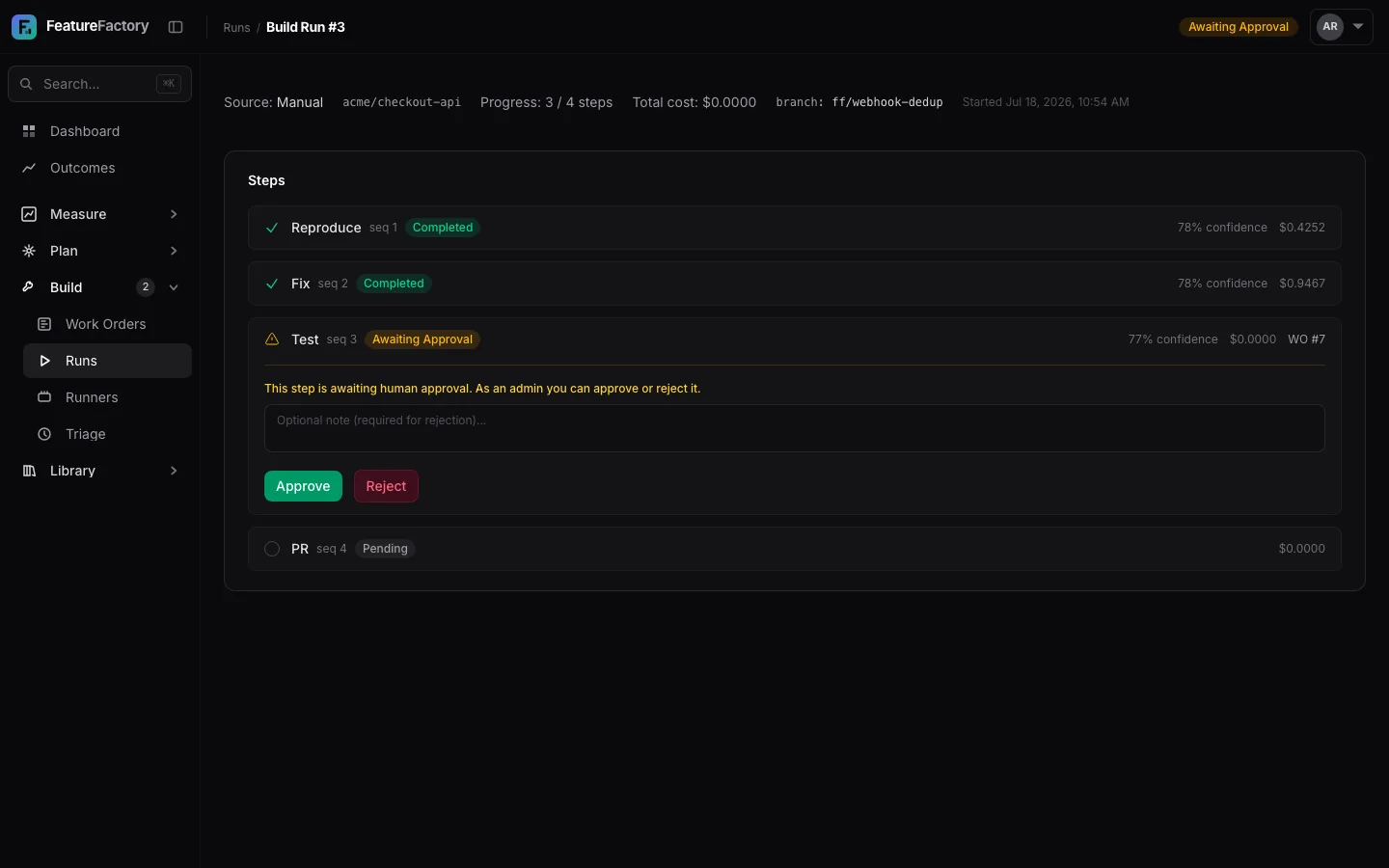
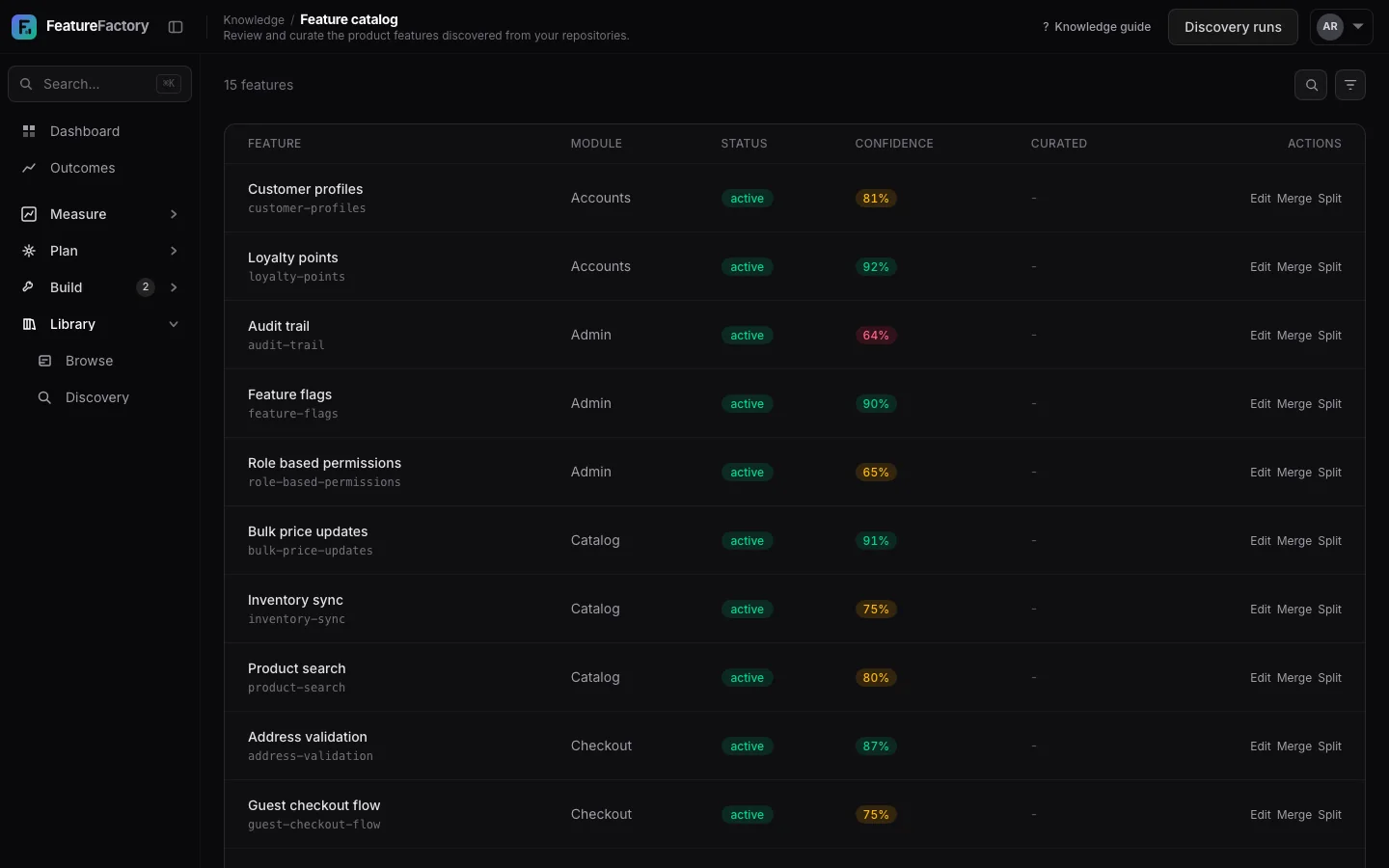
Representative product data shows how the command center, planning evidence, and controlled execution remain connected. Open any view at full size to inspect it.
The missing context
Coding agents make output easier. They do not tell you what deserves to be built, whether the generated change is durable, or if the customer problem improved. FeatureFactory keeps those questions attached to the work from the first signal through the post-release result.
One problem, end to end
Every stage below uses the same example, so you can see how context compounds instead of disappearing at each handoff.
Illustrative workflow · all quantities are sample data, not customer results
01
Measure
Connect delivery history and establish the quality, flow, and outcome measures the feature is meant to change.
02
Plan
Related support, product, and delivery signals become a cited theme and a product plan with testable acceptance criteria.
03
Build
The product plan becomes scoped work with repo context, explicit checks, and a reviewable trail from intent to pull request.
04
Measure again
Compare the shipped change with the baseline: did quality hold, did delivery improve, and did the intended outcome move?
What each stage delivers
The value is not three more dashboards. It is one traceable record of why the work exists, what the agent changed, and whether it held up.
The proof layer
A useful metric changes what you do next. FeatureFactory puts quality, speed, authorship, and product outcomes in the same decision frame.
Compare quality, review effort, cycle time, and rework by authorship instead of treating adoption as the result.
Read delivery flow and durability together, so a faster merge that creates rework does not look like a win.
Keep the original problem and success measure attached to the shipped work, then compare it with the baseline.
Checkout recovery · post-merge
Decision view
Rationale available
Intent to merged PR
Durability check
Target reached
Proof you can inspect
The strongest proof is the evidence your own team can reproduce. Methodology, attribution confidence, and ownership rules are visible before you buy.
See the rubric behind PR quality, effort, and written rationale. Scores are evidence you can inspect, not a mystery grade.
Read the scoring methodologyAuthorship is labeled from explicit signals and shown with confidence, so estimates are never presented as ground truth.
Read the attribution approachRun work from your own machine, keep code in your repositories, and retain the artifacts if you ever leave.
Explore the Local RunnerWorks with your stack
FeatureFactory sits across the systems where customer context, delivery decisions, and code already live. Start with GitHub measurement, then connect more of the loop as your team is ready.
Browse all integrationsPlan from signal
Build and measure
Before you connect
See it on your own work
Join early access to connect your delivery history, see how measurement works, and map the rest of the loop around your existing stack.